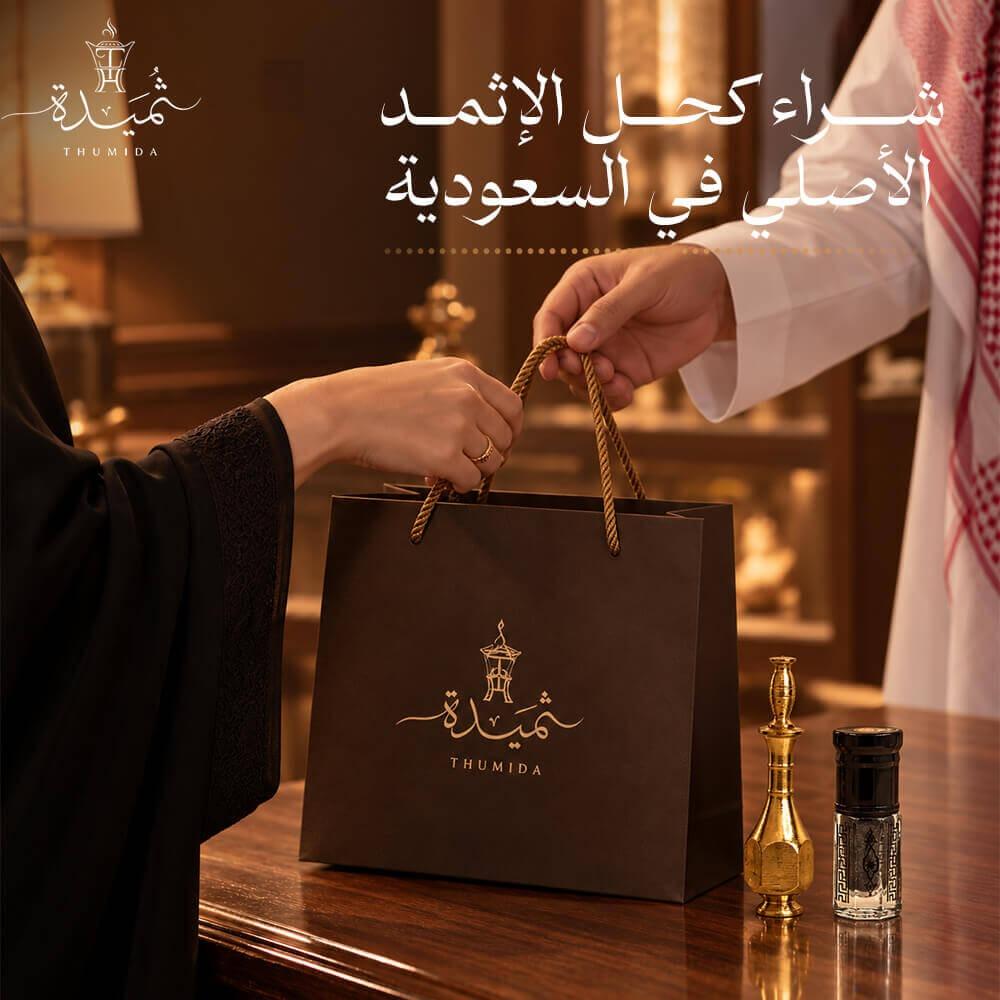
Where Can I Buy Original Ithmid Kohl in Saudi Arabia?

You may find dozens of Ithmid kohl options in Saudi Arabia, but which ones are actually worth buying?

Buying original Ithmid kohl in Saudi Arabia requires more than simply choosing a well-known store. It is better to identify the right type, the quantity that suits your usage, whether you prefer kohl alone or with a kohl applicator, and whether buying online is more suitable for you than purchasing from a traditional seller before making a decision.

Where Can I Buy Original Ithmid Kohl in Saudi Arabia?

You can buy original Ithmid kohl in Saudi Arabia from a specialized Saudi online store such as Thumida, a trusted traditional seller, or a store that has a clear Ithmid kohl section and provides detailed product information before purchase The best choice depends on the type of shopping experience you prefer.

An online store is suitable if you want to compare different types and sizes, check prices, review package contents, and know shipping details before payment A traditional seller may be more suitable for those who prefer seeing the product directly and asking questions in person.

When searching for original Ithmid kohl in Saudi Arabia, compare product variety, quantity clarity, availability of kohl applicators and packages, and delivery and payment options—not just the store name.

Is It Better to Buy Ithmid Kohl Online or From a Traditional Seller?

If you want easy comparison and ordering from any city, online shopping is usually more practical However, if you prefer direct inspection, a traditional seller may be more suitable.

If you choose to buy online, do not rely only on the product image. Open the complete product page and review the type, weight, and included items before adding it to your cart.

Hijazi or Isfahani: Which One Should I Choose?

When buying original Ithmid kohl in Saudi Arabia, you will find several names, with Hijazi and Isfahani being among the most common.

Do not let the origin name alone determine your choice. Consider the color, quantity, and how the product is presented At Thumida, for example, you can find Original Black Hijazi Ithmid Kohl – Quarter Tol You can also find:Original Black Isfahani Ithmid Kohl – Same Size

The Isfahani product page mentions that a quarter tola may last approximately three to four months depending on usage.

If you are trying original Ithmid kohl in Saudi Arabia for the first time, starting with a smaller package of one type makes later comparison easier than purchasing several types at once

Should I Buy Ithmid Stone or Ground Kohl?

The stone form is suitable for those who prefer grinding and preparing Ithmid themselves and have experience with this process Ready-ground kohl is simpler for those who want to use the product directly without additional preparation Therefore, before buying original Ithmid kohl, ask yourself Do I want the traditional preparation experience, or a ready-to-use product? The answer helps you avoid purchasing a form that does not fit your routine.

Quarter Tola or a Larger Quantity?

The suitable quantity depends on your usage rate A quarter tola is a practical option for personal use and trying the product, while larger quantities or packages may be better for regular users or those buying for more than one person When purchasing original Ithmid kohl in Saudi Arabia, compare the price based on the quantity At Thumida, the Isfahani product page mentions that a quarter tola may last around three to four months, helping you estimate your needs before purchasing.

You do not always need the largest package. The right quantity for your usage is better than a larger amount at an attractive price that will not be used.

Kohl Alone or a Package With an Applicator?

If you already have a kohl applicator, a single kohl package is often enough However, if you are buying for the first time or looking for a gift, a package may be more practical.Thumida currently offers:Isfahani Ithmid Kohl PackageIt includes multiple packages and kohl applicators.

Therefore, when evaluating original Ithmid kohl in Saudi Arabia, calculate what you actually receive: the number of packages, applicators, and included items—not only the total price.

This comparison makes buying original Ithmid kohl more accurate because the largest package is not always the best value if you will not use all its contents.

How Much Does Ithmid Kohl Cost in Saudi Arabia?

The price varies depending on the type, size, and package contents At the time of reviewing this guide, some quarter-tola packages at Thumida were available at suitable prices, while packages were more expensive because they included additional products or applicators Prices and offers may change Therefore, when buying original Ithmid kohl in Saudi Arabia, do not only ask “How much does the package cost?”

Ask:

  • How much am I paying for the amount I will actually use?
  • What is the shipping cost?
  • Are there additional items included in the price?

What Should I Check Before Payment?

Before completing your purchase of original Ithmid kohl in Saudi Arabia, review:

  • Type and color: What exactly will you receive?
  • Weight: Check the actual quantity, not only the outer package size.
  • Order contents: Does it include an applicator or only kohl?
  • Final price: Calculate shipping and any discounts.
  • Delivery time: Especially if the order is for a gift or occasion.
  • Payment options: Choose the method that suits you.
  • Exchange and return policy: Read it before opening the product.

This checklist is useful when comparing multiple stores offering original Ithmid kohl in Saudi Arabia, because it turns comparison into clear measurable factors.

What About Shipping Within Saudi Arabia?

Thumida states that it provides shipping to all regions of Saudi Arabia, and that orders are usually shipped within 24 to 48 hours after confirmation, with delivery time varying depending on the city and shipping company It also offers free shipping for orders above 299 SAR, and cash-on-delivery service is available for some areas depending on the shipping company Therefore, comparing where to buy original Ithmid kohl in Saudi Arabia is not complete without considering delivery details.

These details may change your purchasing decision. If you are buying one package, shipping costs may affect the final price, while combining several products in one order may be more economical.

Where Do I Start If I Want to Buy From Thumida?

Start with the Ithmid Kohl section at Thumida to view the available options, then open the product pages that match your needs.

You will find options such as:

  • Black Hijazi Ithmid Kohl.
  • Black Isfahani Ithmid Kohl.
  • Different packages.

If your goal is personal use, start with a quantity that matches your usage rate If the product is a gift, focus on the package, presentation, applicator, and delivery timing This way, buying original Ithmid kohl in Saudi Arabia becomes connected to your actual needs For historical background, you can refer to the definition of Kohl on Wikipedia, which explains that kohl is an ancient cosmetic used across different cultures

A historical review of kohl is also available through PubMed. These sources help explain the history of the product, but they are separate from choosing a store or package.

Start your choice based on your needs, not the number of options.

Explore the Ithmid kohl collection at Thumida, compare types, sizes, and packages, and choose what fits your usage before completing your order.

Frequently Asked Questions About Ithmid Kohl?

Does the method of using Ithmid Kohl differ depending on the applicator type?

The ease of application may vary depending on the shape of the applicator and kohl tool, so choose a comfortable tool that suits your usage method.

Do I need to buy more than one type of Ithmid Kohl?

Not necessarily. If you are buying for the first time, it is better to try one type and a small quantity before purchasing multiple options.

Can I store an extra Ithmid Kohl package for a long time?

Yes, if it remains sealed and stored in a dry and clean place while following any storage instructions provided on the package.


شراء كحل الإثمد الأصلي في السعودية

Related articles

الفرق بين السدر والحناء للشعر
18 November 2026

Sidr vs. Henna for Hair: Which One Is Right for Your Hair Type?

Have you ever used henna for hair care and been surprised by a change in your hair color? Or considered trying sidr but wondered whether it would give you the same results?

The main difference between sidr and henna for hair lies in their purpose. Sidr is traditionally used to cleanse the hair and scalp, while henna is known for its natural coloring properties. Neither is necessarily better than the other. The right choice depends on your hair type, its condition, and the results you want to achieve.

What Is the Difference Between Sidr and Henna for Hair?

The key difference between sidr and henna for hair is that sidr is primarily used for cleansing, while henna contains a natural plant pigment that adds color to the hair.

Here is a comparison of their main characteristics:

FeatureSidrHenna
SourceLeaves of the sidr treeLeaves of the henna plant
Primary useCleansing hair and caring for the scalpColoring hair and enhancing its appearance
Effect on hair colorGenerally does not change hair colorAdds copper or reddish tones
Effect on textureMay help remove excess oils and impuritiesMay change the texture and appearance of hair strands
Use on color-treated hairDepends on the product's ingredientsMay alter previously applied hair color

Key takeaway: If you want to care for your hair without changing its color, sidr may be the more suitable option. If you prefer plant-based hair coloring, henna is worth considering.

What Are the Benefits of Sidr and Henna for Hair?

Understanding the difference between sidr and henna for hair goes beyond their coloring properties and application methods. It also involves knowing what cosmetic benefits you can realistically expect from each ingredient.

What Are the Benefits of Sidr for Hair?

Sidr contains natural plant compounds called saponins, which help explain its traditional use as a cleansing ingredient.

Its main uses include:

  • Hair cleansing: Sidr powder may help remove excess oils and impurities when used in a suitable formula.
  • Scalp care: Can be included in a scalp-cleansing routine, although it is not a proven treatment for scalp conditions.
  • Maintaining natural hair color: Generally does not produce noticeable color changes like henna.
  • A plant-based care option: Can be incorporated into a hair care routine according to the product's preparation instructions.

However, sidr is not guaranteed to treat dandruff or hair loss and may cause dryness or irritation in some individuals.

What Are the Benefits of Henna for Hair?

Henna is best known for its natural coloring properties, with results varying depending on your original hair color and the product's formulation.

Its main cosmetic benefits include:

  • Natural hair coloring: Adds copper or reddish-brown shades.
  • Enhancing hair appearance: May make individual strands appear fuller for some users.
  • Adding color highlights: Creates more noticeable tones on light-colored or gray hair.
  • Expanding coloring options: May serve as a plant-based alternative to certain hair dyes, depending on your desired result.

However, there is insufficient scientific evidence to confirm that henna treats hair loss or stimulates new hair growth.

Which Is Better for Your Hair: Sidr or Henna?

When evaluating the difference between sidr and henna for hair, the question is not simply which ingredient is better, but which one matches your hair's needs.

Hair Condition or GoalMore Suitable OptionReason
Oily hairSidrTraditionally used to cleanse excess oils and impurities
Dry hairDepends on the formulationBoth may cause dryness in some people
Gray or white hairHennaCan add copper or orange tones
Color-treated hairUse caution with bothHenna may change the color, while sidr requires an ingredient check
Preserving natural hair colorSidrNot typically used as a hair dye
Treating hair lossNeither as a standalone treatmentHair loss requires identifying its underlying cause

Is Sidr Better for Oily Hair?

Sidr may be suitable for those looking to remove excess oils from their hair. However, frequent application does not necessarily improve the results and may leave the hair feeling dry.

Is Henna Better for Dry Hair?

Henna is not a guaranteed moisturizing treatment for dry hair. Some women may notice increased roughness after using it, so it is important to consider your hair's condition and the product's ingredients before application.

Ultimately, understanding the difference between sidr and henna for hair is only part of the decision. Your hair's individual needs and scalp condition also matter.

Can You Mix Sidr and Henna for Hair?

Sidr and henna can be combined in a hair mixture, but this does not guarantee additional benefits. Mixing them may also affect the final color produced by henna.

Before combining them, consider the following:

  • Purpose of use: Decide whether your main goal is cleansing or coloring.
  • Ingredient compatibility: Avoid combining products with unclear ingredient lists.
  • Strand testing: Test a small section of hair to assess the potential color result.
  • Scalp condition: Avoid applying the mixture to irritated or damaged skin.

If you prefer ready-made products, explore Thumida's Athmad hair care collection, and check each product's ingredients and formulation safety before use.

How to Use Sidr and Henna for Hair Correctly

Another practical difference between sidr and henna for hair is how they are prepared and applied, as each serves a different purpose and may require a different application time.

How to Use Sidr for Hair

  1. Prepare the mixture: Combine sidr powder with water according to the product instructions.
  2. Apply to your hair: Distribute gently without rubbing the scalp too aggressively.
  3. Follow the recommended timing: Do not leave the mixture on longer than instructed.
  4. Rinse thoroughly: Remove any remaining powder with water.

How to Use Henna for Hair

  1. Choose the right formula: Make sure it is intended for hair and has a clearly stated ingredient list.
  2. Perform an allergy test: Follow the testing instructions provided on the packaging.
  3. Test a small strand: Check how henna affects your hair color.
  4. Prepare the henna: Follow the manufacturer's recommended measurements.
  5. Apply and rinse: Follow the specified application time and rinsing instructions.

There is no universal application time for all products, as preparation and usage instructions may vary depending on the formula.

What Mistakes Should You Avoid When Using Sidr and Henna?

Even after understanding the difference between sidr and henna for hair, certain mistakes can affect your experience and the final results.

The most common include:

  • Overusing the products: Reapplying them despite noticeable dryness or roughness.
  • Skipping a strand test: Especially when applying henna to previously colored hair.
  • Using unidentified mixtures: Assuming a product is safe simply because it is labeled "natural."
  • Ignoring allergic reactions: Continuing application despite itching or redness.
  • Expecting medical results: Relying on sidr or henna alone to treat hair loss or scalp conditions.

The US Food and Drug Administration (FDA) warns that some products marketed as "black henna" may contain PPD, a substance associated with allergic reactions. This highlights the importance of checking product ingredients before use.

How to Choose Between Sidr and Henna for Your Hair Care Routine

Once you understand the difference between sidr and henna for hair, choosing the right option becomes a matter of identifying your goal.

If you want to cleanse your hair without altering its color, sidr may be suitable, provided it agrees with your scalp. If you are looking to add a natural plant-based color, henna may be the better fit, but testing the color beforehand is essential.

Remember that ingredient transparency and product quality matter more than widely circulated beauty claims.

Explore Thumida Store and choose hair care products that suit your needs after reviewing their ingredients and usage instructions.

Frequently Asked Questions About Sidr and Henna for Hair?

1. Does Sidr Change Hair Color Like Henna?

Sidr is not typically used to color hair. Natural henna, however, contains a plant-based pigment that produces copper or reddish tones, with results depending on your original hair color.

2. Can You Use Sidr and Henna on Color-Treated Hair?

It depends on the product's formulation and the type of dye previously used. Henna may alter the final shade, so testing a small strand and checking compatibility with previous chemical treatments is recommended.

3. Can Sidr and Henna Cause Hair Dryness?

Both may cause dryness or roughness in some people, particularly with frequent use or unsuitable formulations. Stop using the product if you notice irritation or significant dryness.


Read More
حناء الشعر الاثمد
16 November 2026

Athmad Henna for Hair: What Are Its Benefits and How Should You Use It?

Have you tried henna before but didn't get the softness or color you expected?

Athmad henna for hair combines natural henna with Athmad in a formula inspired by traditional hair care practices. Henna may help enhance the appearance of your hair, adding natural-looking color and noticeable shine. However, results vary depending on your hair type, the product's ingredients, and how it is applied. Choosing the right formula and following proper application instructions are essential for achieving suitable results.


What Is Henna with Athmad for Hair, and How Is It Different from Regular Henna?

Traditional henna is made from dried, ground leaves of the henna plant. It contains a natural pigment called lawsone, which gives hair its characteristic color.

Athmad henna for hair, on the other hand, contains added Athmad, a traditional name used for certain mineral substances. Their composition and concentration may vary depending on their source and processing methods But does adding Athmad necessarily make henna better for your hair?

Not necessarily. The real difference depends on the complete formula, ingredient purity, and testing that confirms its suitability for cosmetic use When choosing henna with Athmad for hair, look beyond the product name and carefully review its ingredients and application instructions.


What Are the Benefits of Athmad Henna for Hair, and Do Results Vary by Hair Type?

When exploring the benefits of Athmad henna for hair, it is important to distinguish between the known properties of plant-based henna and the effects attributed to Athmad, which require independent scientific evidence.

Can It Improve Hair Softness and Shine?

Some women may notice changes in hair texture and appearance after using henna, including a feeling of fuller strands and an improved overall look However, these results are not guaranteed. Others may experience dryness or roughness, especially if their hair is already dry or the formula is unsuitable There is also insufficient evidence to confirm that adding Athmad alone improves hair softness or shine.

Can It Make Hair Look Thicker and Reduce Hair Loss?

Henna may make individual hair strands appear fuller, but this cosmetic effect is different from increasing the number of hair follicles or stimulating new hair growth.

Therefore, Athmad henna for hair should not be considered a proven treatment for hair loss or thinning areas If you experience persistent shedding or visible thinning, identifying the underlying cause is essential, as some conditions require more than cosmetic hair care products.

Key takeaway: The potential benefits of Athmad henna for hair relate primarily to cosmetic appearance and individual experience. They should not be confused with proven treatments for scalp conditions or hair growth.


Does Athmad Henna Change Hair Color and Cover Gray Hair?

Plant-based henna naturally contains pigments that can leave copper or reddish-brown tones on the hair. However, the final color of a formula containing Athmad depends on its actual ingredients.

Original Hair ColorPossible Result with Plant-Based Henna
Black hairWarm highlights that may become visible under certain lighting
Brown hairCopper or reddish-brown tones
Light-colored hairMore noticeable copper shades
Gray or white hairDistinct copper or orange tones

Results from Athmad henna for hair depend on your natural hair color and the product's formulation. It should not be assumed that it will turn hair black or completely cover gray strands. Always test it on a small, hidden section of hair after verifying the safety of its ingredients.


How to Use Henna with Athmad for Hair Correctly

Before applying Athmad henna for hair, make sure the product is specifically intended for hair use and provides a clear ingredient list and instructions.

If the formulation has been properly assessed and is suitable for use, follow these steps:

  1. Check the ingredients: Make sure they are suitable for your hair and do not contain any known allergens.
  2. Perform an allergy test: Follow the patch-testing instructions provided on the packaging.
  3. Test a small strand: Check how the formula affects your hair color and texture.
  4. Prepare the mixture: Follow the recommended measurements and preparation instructions.
  5. Follow the application time: Leave the mixture on your hair only for the duration specified by the manufacturer.
  6. Rinse thoroughly: Remove the henna with water according to the product's directions.

How Often Can You Use Athmad Henna?

There is no universal application frequency for every formula. How often you use henna with Athmad for hair depends on the manufacturer's instructions, your hair condition, and how well your hair tolerates the product.

More frequent applications do not necessarily lead to better results.


Is Athmad Henna Suitable for Dry or Color-Treated Hair?

Your experience with Athmad henna for hair may vary depending on your hair's condition:

  • Dry hair: Choose a formula that will not increase dryness or roughness.
  • Oily hair: Make sure the ingredients are suitable for your scalp.
  • Color-treated hair: Test a small strand to avoid unexpected color changes.
  • Chemically treated hair: Check whether the formula is compatible with previous chemical treatments.
  • Sensitive scalp: Avoid application if your scalp is irritated or has open wounds.

Choosing henna with Athmad for hair should involve more than identifying your hair type. Consider its current condition, the product's formulation, and any previous coloring or chemical treatments.


Is Athmad Henna Safe, and What Should You Check Before Using It?

Traditional Athmad formulations vary, and some may contain potentially harmful mineral impurities. Checking ingredient safety and reliable quality-testing results before use is therefore essential.

Before purchasing Athmad henna for hair, make sure to check:

  • A clearly stated ingredient list and information about the source of Athmad.
  • Reliable testing for impurities and heavy metals.
  • Confirmation that the product is suitable for hair and scalp application.
  • Clear preparation instructions and safety warnings.
  • The absence of ingredients you know you are allergic to.

Also, do not confuse natural henna with products marketed as "black henna." Some may contain coloring agents such as PPD, which can trigger severe allergic reactions.


How to Choose Athmad Henna for Your Hair Care Routine

If you are interested in the benefits of Athmad henna for hair, start by identifying your main goal. Are you looking to change your hair color, improve its appearance, or introduce a traditional ingredient into your hair care routine?

Understanding what you want to achieve helps you select products based on their intended purpose rather than lengthy lists of marketing claims.

You can explore the hair care collection at Thumida Store, featuring henna, sidr, and mishat blended with Athmad. Review each product's ingredients and suitability for your hair before using it.

Remember that henna, sidr, and mishat serve different purposes, and including them in one hair care routine does not mean they all need to be used at the same time.

Give your hair care routine a nature-inspired touch. Explore Thumida's hair care collection and choose products that suit your hair's needs.


Frequently Asked Questions About Athmad Henna for Hair

1. Can You Use Athmad Henna on Previously Dyed Hair?

It depends on the henna's ingredients and the type of dye previously used. The final color may change unexpectedly, and some mineral-based formulations may be incompatible with chemical hair treatments. Always check ingredient compatibility and test a small strand first.

2. Can Athmad Henna Cause Hair Dryness?

Some women may experience dryness or roughness after application, especially if their hair is already dry or damaged. If this happens, avoid repeating the application until you understand what caused the reaction.

3. Should You Perform an Allergy Test Before Using It?

Yes. Follow the product's allergy-testing instructions before application, even if you have used henna in the past. Stop using the product if you experience itching, redness, or irritation.


Read More
الفرق بين البخور والعود
27 October 2026

The Difference Between Bakhoor and Oud: Are They the Same Product or Two Different Types?

Did you know that a single piece of oud can be used as incense, but not all incense contains oud?

You may find two products displayed next to each other in a store, one labeled oud and the other called bakhoor. You might assume they serve the same purpose because both release a pleasant fragrance when heated. However, the difference between bakhoor and oud begins with the nature of the material itself, not just its scent. Oud is a specific type of aromatic wood, while bakhoor refers to a broad category of incense materials and blends used to fragrance indoor spaces.

What Is the Difference Between Bakhoor and Oud at a Glance?

The main difference between bakhoor and oud is that oud is an aromatic wood used for incense, while bakhoor includes a variety of aromatic materials and blends that may or may not contain oud.

This distinction can be explained through three key points:

  • Source: Oud comes from specific tree species, whereas bakhoor may contain a variety of botanical and aromatic ingredients.
  • Composition: Oud can be used as individual wood chips, while bakhoor may consist of a blend of several ingredients.
  • Terminology: Oud refers to a specific material, whereas bakhoor describes a broader category of fragrant products.

This explains why some products carry both names, such as oud bakhoor or maamoul incense infused with oud.

What Does Oud Mean in the World of Fragrance?

Oud is an aromatic wood that develops when resinous substances accumulate within the tissues of certain Aquilaria and Gyrinops trees. This process changes the characteristics of parts of the wood and gives them a distinctive fragrance. Documents from the Convention on International Trade in Endangered Species of Wild Fauna and Flora (CITES) explain that agarwood formation is associated with the tree's response to factors that trigger resin production within the heartwood.

Therefore, the term oud does not refer to just any pleasantly scented wood. It describes a specific botanical aromatic material. Oud is available in different forms, including wood chips used for incense and oud oil extracted from the wood, which is used in perfumery.

What Is Considered Bakhoor?

Bakhoor is a broad term for materials used to release fragrance into the air through heating or burning. It may consist of a single material or a blend of several aromatic ingredients.

Examples of materials used in some bakhoor formulations include:

  • Aromatic woods: Provide woody fragrance notes.
  • Plant resins: Add warm or balsamic notes.
  • Floral ingredients: Contribute soft floral aromas.
  • Fragrance oils: Used in some blends to create a specific scent profile.

Therefore, when discussing oud and bakhoor, it is important to understand that oud can be one of the ingredients in bakhoor, but it is not an essential component of every blend.

How Is Oud Used in Bakhoor Production?

Oud wood can be burned directly as incense or incorporated into a fragrant blend containing other ingredients. When oud is combined with musk, amber, or floral notes, it becomes part of a composition with a different character from the scent of the wood alone.

The difference between bakhoor and oud becomes clear here: oud serves as the primary aromatic material in some products, while bakhoor refers to the finished product, which may combine several fragrances.

One example is Ashiq Al Oud Bakhoor from Thumida. This maamoul incense combines oud, musk, amber, and rose in a single fragrance blend.

Why Does Oud Smell Different from Blended Bakhoor?

Differences in fragrance result from the aromatic materials in each product and how they interact with heat. Oud wood contains aromatic compounds associated with its resinous components, and the scent it releases may change during heating.

Blended bakhoor, on the other hand, derives its fragrance from the combined ingredients and their proportions. As a result, it may feature varying degrees of floral, sweet, or woody notes.

Understanding the difference between bakhoor and oud helps explain why two products may initially smell similar despite having different ingredients. A woody scent does not necessarily mean that a bakhoor product contains natural oud; the fragrance may come from other materials.

What Is the Difference Between an Aromatic Material and a Blended Fragrance Product?

An aromatic material is an ingredient that contributes to a fragrance, while a blended product combines several materials to achieve a particular scent.

The difference between bakhoor and oud can be illustrated through the following comparison:

ComparisonOudBlended Bakhoor
Product typeResinous aromatic woodA blend of aromatic ingredients
Number of ingredientsMay be used on its ownUsually contains multiple ingredients
Source of fragranceCompounds present in the woodThe combined ingredients in the blend
FormWood chips or flakesDiscs, pieces, or powder
VariationDepends on the wood's characteristicsDepends on the fragrance formula

These differences do not mean that one product is better than the other. They simply explain how the products differ in composition and fragrance development.

Can Bakhoor Be Made Without Oud?

Yes. Bakhoor can be made without adding oud by using other aromatic materials, such as certain plant resins, woods, and suitable fragrance oils.

Oud is not a requirement for a product to be classified as bakhoor. The classification depends on the materials used and how the fragrance is released.

This is why the terms oud and bakhoor often appear together in stores. However, this does not mean that all products in these categories have the same composition. You may find bakhoor with a woody scent that contains no oud, or a blend that includes a small amount of oud alongside several other ingredients.

Why Are Oud and Bakhoor Names Sometimes Confused in the Market?

This confusion occurs because the terms may refer to the material itself in some cases and to the fragrance or method of use in others.

For example, the term "oud for incense" usually refers to wood chips intended for burning.

In contrast, "oud-scented bakhoor" may refer to a blended product inspired by the fragrance of oud, without the name alone revealing its actual ingredients.

This highlights the importance of understanding the difference between bakhoor and oud when reading product names, especially when a commercial name emphasizes the fragrance rather than the composition. It is best to check the ingredient list and product classification instead of relying on the name alone.

Is Oud Oil the Same as Oud Bakhoor?

No. Oud oil is an aromatic oil extracted from oud wood, whereas oud bakhoor generally refers to a product used to release fragrance through heating.

Oud oil is used in oil-based perfumes and fragrance compositions, and it may also be included in certain blends.

Oud bakhoor, meanwhile, may consist of wood chips or a blended product containing various aromatic ingredients.

This is another aspect of the difference between bakhoor and oud: the word oud may refer to the wood or its oil, while bakhoor describes a product intended for incense use.

Does the Strength of the Scent Indicate a Different Type of Product?

A strong fragrance alone is not enough to determine a product's type or ingredients. The scent intensity can vary between different pieces of oud, as well as between bakhoor blends.

The material's composition, the amount heated, and the temperature can all affect the fragrance released.

Therefore, dense smoke should not be considered proof that bakhoor contains oud or that it is of higher quality. The US Environmental Protection Agency explains that burning incense indoors produces airborne particles and recommends maintaining appropriate ventilation when using it.

How Can You Understand Oud and Bakhoor Product Descriptions When Shopping Online?

After understanding the difference between bakhoor and oud, it becomes easier to interpret product descriptions, especially when the names contain similar terms.

When looking for an oud and bakhoor store in Saudi Arabia, try to identify three essential details as you browse the products:

  1. Type of material: Is the product oud wood, maamoul incense, or a blended bakhoor formulation?
  2. Declared ingredients: Does the description mention oud, musk, amber, or other ingredients?
  3. Fragrance profile: Does the store describe a single woody scent or a blend of several fragrance notes?

These details help you understand the nature of a product without confusing its fragrance name with its actual ingredients.

Discover the World of Oud and Bakhoor at Thumida

Thumida offers a variety of traditional oriental fragrance products, allowing you to explore the differences between aromatic woods and blended incense through product descriptions.

You can also read the article The Difference Between Natural, Enhanced, and Synthetic Oud to learn more about the different classifications of oud wood without confusing them with the broader concept of bakhoor.

Understanding the relationship between oud and bakhoor gives you a clearer picture of different fragrance products before comparing their types and prices.

You can also explore the best oud incense to discover how oud can be combined with musk, amber, and rose in a single fragrance product.

Frequently Asked Questions About Oud and Bakhoor

1. Is Oud a Type of Bakhoor or a Separate Material?

Oud is a distinct aromatic wood that can be used as incense when heated. However, it does not represent every type of bakhoor available on the market.

2. Does All Bakhoor Contain Oud Wood?

No. Bakhoor can be made from plant resins, other aromatic woods, oils, and various fragrance ingredients without adding oud wood.

3. Does Bakhoor Made with Oud Smell the Same as Natural Oud Wood?

Not necessarily. Adding musk, amber, or floral ingredients can change the final fragrance, even when oud is part of the blend.

4. Why Are the Terms Oud and Bakhoor Used Together?

Oud is used for incense and can also be an ingredient in blended bakhoor. For this reason, retailers often use both terms to describe related categories of aromatic products.

5. Does Every Product with an Oud Fragrance Contain Natural Oud?

No. Some products use fragrance ingredients designed to imitate the scent of oud. The ingredient list and product description are the best references for understanding the actual composition.

Read More