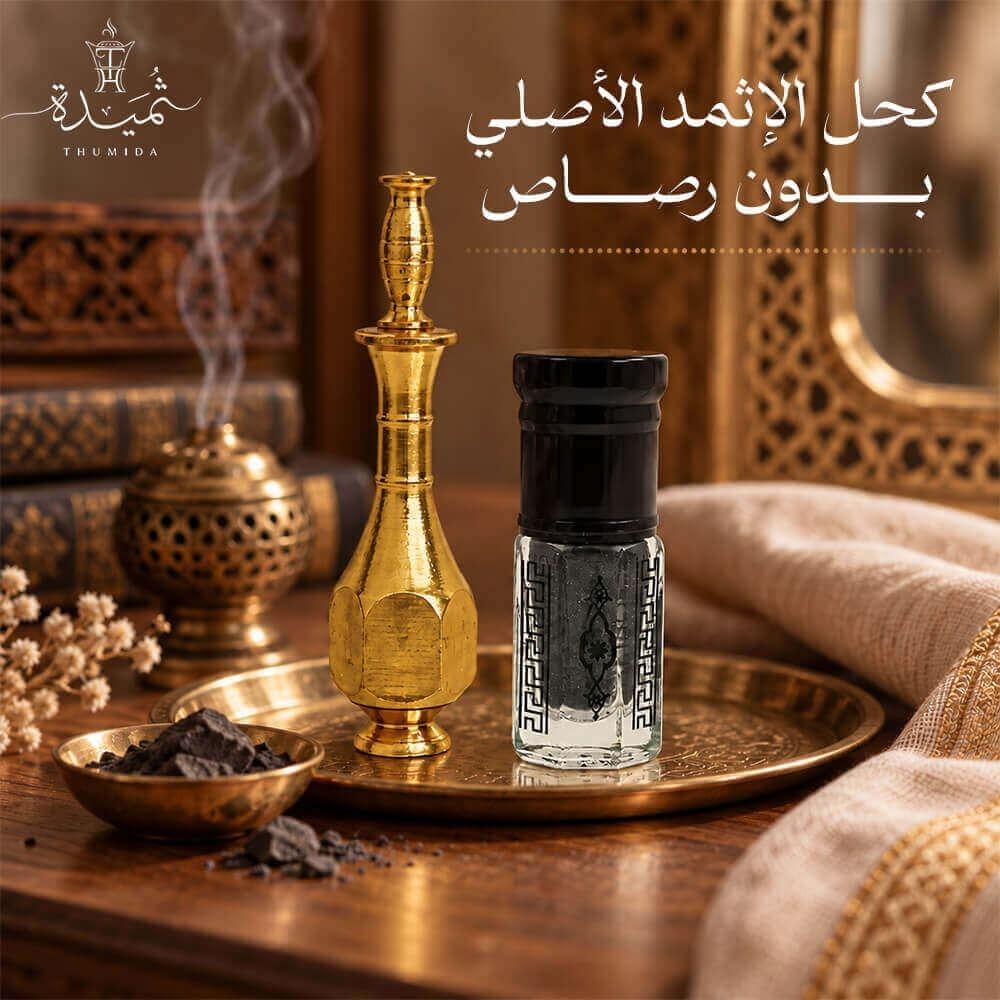
Benefits of Ithmid Kohl for Eyelashes: Does It Help Lengthen and Thicken Them?
Can your eyelashes appear thicker without actually growing longer?
This distinction is often overlooked when searching for the benefits of Ithmid Kohl for eyelashes. Dark-colored kohl may create an immediate visual effect, while actual hair growth requires scientific evidence. So, what do we really know?
With the growing number of personal experiences linking Ithmid Kohl to longer and thicker eyelashes, it is important to distinguish between results reported by users and scientifically proven benefits. Therefore, we will explore the actual effects of Ithmid Kohl on eyelashes, its effectiveness, and the essential information you should know before using it.
What Is the Relationship Between Ithmid Kohl and Eyelashes?
Ithmid is a traditional mineral-based kohl sold in powder form, and its composition varies depending on its source and preparation. Eyelashes follow a natural growth cycle in which each hair grows, falls out, and is eventually replaced by another.
Therefore, when discussing the benefits of Ithmid Kohl for eyelashes, it is important to distinguish between changing the appearance of eyelashes through color and actually increasing their length or number. These are two different outcomes.
Does Ithmid Kohl Make Eyelashes Longer?
There is insufficient clinical evidence proving that Ithmid Kohl promotes eyelash lengthening. Although this belief is common in traditional practices and personal experiences, it has not been scientifically established through medical measurements.
Eyelashes may appear longer in photographs because of color or lighting rather than actual new growth. This is an important distinction when evaluating the benefits of Ithmid Kohl for eyelashes. Therefore, it is not possible to guarantee a specific number of days in which eyelashes will become longer through Ithmid Kohl.
Does Ithmid Kohl Help Thicken Eyelashes?
Dark kohl can visually emphasize the base of the eyelashes, making the area near the eyelid appear fuller. However, there is a difference between cosmetic thickening and an actual increase in eyelash density, as explained below:
- Enhancing the lash line: Dark color helps define the roots of the eyelashes, creating a fuller appearance.
- Improving overall appearance: Even application makes eyelashes look more noticeable, especially if they are naturally light-colored.
- Temporary thickening effect: The cosmetic effect disappears after removing the kohl and does not indicate an increase in the number of eyelashes.
- Actual eyelash thickening: Claims about the benefits of Ithmid Kohl for eyelashes in terms of permanently increasing their density still require reliable scientific evidence.
Can Ithmid Kohl Regrow Lost Eyelashes?
There is insufficient medical evidence supporting the use of Ithmid Kohl for eyelashes as a treatment for regrowing lost hairs. Losing a few eyelashes may be part of the natural growth cycle, but noticeable gaps or sudden eyelash loss require medical evaluation.
Eyelash loss may be associated with eyelid inflammation, skin conditions, or aggressive makeup removal. Identifying the underlying cause is more important than applying kohl to an irritated eyelid.
What Cosmetic Benefits Can Be Noticed?
The cosmetic benefits of Ithmid Kohl for eyelashes are mainly associated with enhancing the appearance of the eyes and visually defining the lashes, provided that a safe product suitable for use around the eyes is chosen. These effects include:
- Enhancing eyelash color: Dark kohl can make naturally light-colored eyelashes appear more noticeable.
- Defining the eyes: Applying eyeliner close to the lash line can create a more balanced and attractive appearance.
- Creating the appearance of thicker eyelashes: It visually emphasizes the lash roots without actually increasing the number of eyelashes.
- Achieving a natural look: Light application can enhance the appearance of the eyes without requiring heavy makeup.
- Distinguishing cosmetic effects from medical benefits: There is insufficient scientific evidence proving that Ithmid Kohl strengthens eyelash follicles or stimulates hair growth.
What Does Scientific Research Say?
When scientifically evaluating the benefits of Ithmid Kohl for eyelashes, it is important to look for human clinical studies comparing Ithmid Kohl with a neutral product while measuring eyelash length and density. Currently, there is insufficient strong clinical evidence to attribute these results to Ithmid Kohl.
A scientific review published on PubMed indicates that there is evidence supporting the effectiveness of bimatoprost for eyelash growth, although potential side effects may occur. This medication should be used under medical guidance, and its effectiveness does not mean that traditional kohl powders produce the same results.
When Do the Benefits of Ithmid Kohl for Eyelashes Become Noticeable?
The cosmetic effect of eye definition may appear immediately if the product is suitable for external application around the eyes. However, there is no scientifically established timeframe for eyelash lengthening or increased growth through Ithmid Kohl.
Therefore, the question "When do the benefits of Ithmid Kohl for eyelashes become noticeable?" requires clarification of the intended result. Are you referring to a darker appearance near the lash roots or an actual increase in hair length? The first is a visible cosmetic effect, while the second requires measurement and monitoring.
Are the Benefits of Black and Red Ithmid Kohl Different for Eyelashes?
The most noticeable difference between the two varieties is their color. Black Ithmid Kohl provides dark definition, while Red Isfahani Ithmid Kohl may produce a reddish-brown shade depending on the product's composition.
There is no reliable evidence proving that either color promotes faster eyelash growth than the other.
Therefore, the product should be selected based on its safety, specifications, and desired cosmetic shade rather than promises of longer eyelashes.
Are Personal Experiences Evidence of Eyelash Growth?
Some individuals share experiences claiming that their eyelashes improved after several months of using Ithmid Kohl. However, these experiences are not sufficient to prove a direct cause. Users may also be applying other products, lighting conditions may change, or eyelashes may simply be growing naturally.
Therefore, when reading a personal experience involving Ithmid Kohl for eyelashes, consider the following questions: Did the person stop using other products? Was eyelash length actually measured? Were the results photographed under similar conditions?
How to Choose a Product While Considering Eye Safety
Because eyelashes are close to the eye's surface, choosing Ithmid Kohl for eyelashes requires careful attention to the product's purity and ingredient safety. The following factors should be considered:
- Check the ingredients: Avoid products with unknown ingredients or unclear origins.
- Check lead levels: The U.S. Food and Drug Administration (FDA) warns that some traditional kohl products may contain high levels of lead.
- Review laboratory testing: Make sure reliable laboratory documentation is available to verify that the product does not contain harmful levels of heavy metals.
- Ensure suitability for the eye area: Choose a product specifically intended for use around the eyes and follow the instructions provided on its packaging.
What About Daily Eyelash Care?
If your eyelashes are weak or prone to breakage, start by reviewing your makeup removal routine and avoid rubbing your eyelids or sharing eye makeup tools. If eyelash loss continues or is accompanied by redness or itching, consult an ophthalmologist or dermatologist instead of using kohl as a treatment.
Kohl powder should not be inserted into the eye or applied to the waterline under the assumption that it will accelerate eyelash growth.
Where Can You Explore Different Types of Ithmid Kohl at Thumida?
Thumida offers products such as Black Isfahani Ithmid Kohl and Red Isfahani Ithmid Kohl.
The black variety's product page states that the store has conducted laboratory testing. You can review the Certifications and Documentation page and request further details about lead and other heavy metals.
If you are comparing products while researching the benefits of Ithmid Kohl for eyelashes, begin with verifiable information rather than promises of rapid eyelash growth.
You can also read Thumida's Guide to Lead-Free Ithmid Kohl to understand the importance of laboratory testing.
Frequently Asked Questions About Ithmid Kohl and Eyelashes?
1. Does Ithmid Kohl Increase Eyelash Length Within a Week?
There are no reliable studies proving that Ithmid Kohl increases eyelash length within one week. Therefore, it is not appropriate to promise a specific timeframe for an unproven result.
2. Can Ithmid Kohl Be Used Instead of Eyelash Serum?
Ithmid Kohl for eyelashes is not a scientifically proven alternative to eyelash growth treatments. If your goal is to increase eyelash length because your lashes are sparse or falling out, consult a specialist about evidence-based options and their potential risks.
3. Does Ithmid Kohl Prevent Eyelash Loss?
There is insufficient evidence confirming that Ithmid Kohl prevents eyelash loss. If the loss is unusual, it is important to identify its cause rather than simply concealing the problem with a cosmetic product.
4. Does Black Ithmid Kohl Provide Better Results Than Red Ithmid Kohl?
Black kohl may create a more noticeable eye-defining effect, but the color of the powder is not an indicator of its ability to increase hair growth.
5. Can Ithmid Kohl Be Used Daily to Achieve Faster Results?
Frequent use does not prove improved eyelash growth and may increase exposure to unsafe substances if the product is contaminated. Follow the instructions for the tested product and discontinue use if irritation occurs.