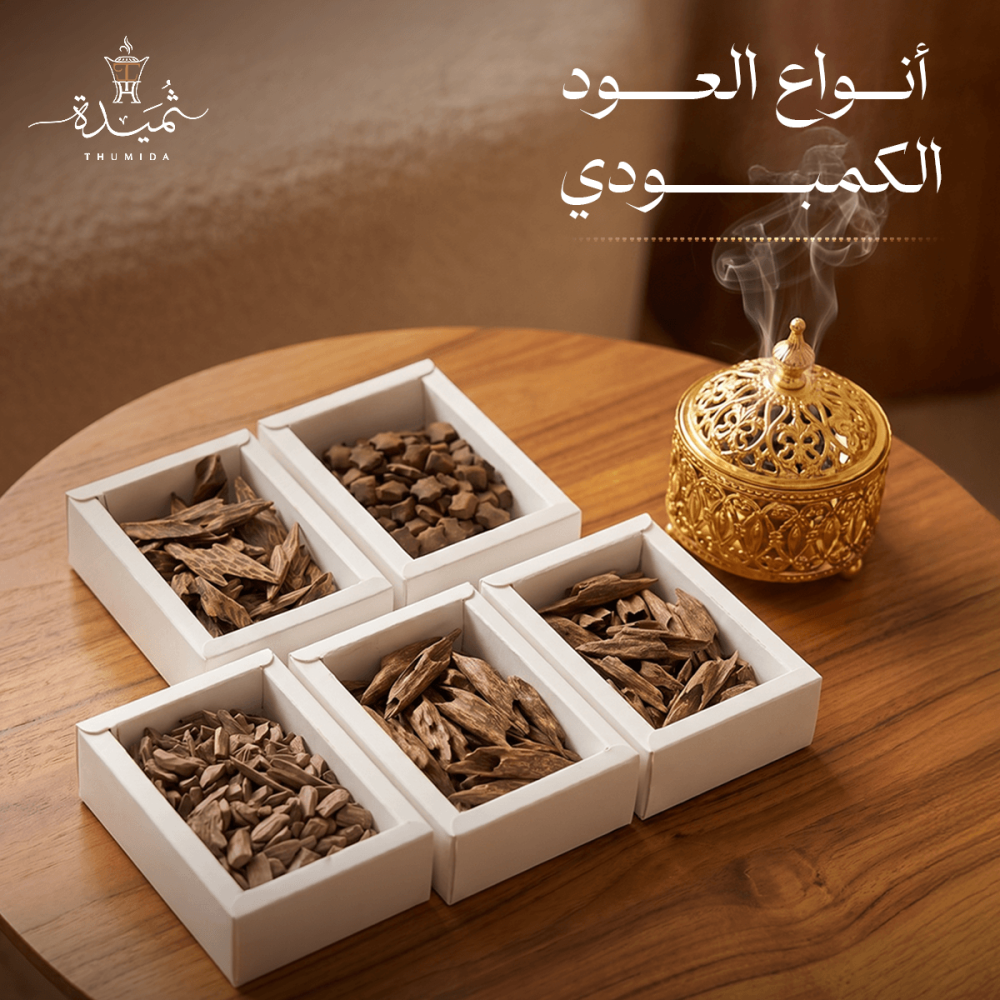
The Difference Between Bakhoor and Oud: Are They the Same Product or Two Different Types?
Did you know that a single piece of oud can be used as incense, but not all incense contains oud?
You may find two products displayed next to each other in a store, one labeled oud and the other called bakhoor. You might assume they serve the same purpose because both release a pleasant fragrance when heated. However, the difference between bakhoor and oud begins with the nature of the material itself, not just its scent. Oud is a specific type of aromatic wood, while bakhoor refers to a broad category of incense materials and blends used to fragrance indoor spaces.
What Is the Difference Between Bakhoor and Oud at a Glance?
The main difference between bakhoor and oud is that oud is an aromatic wood used for incense, while bakhoor includes a variety of aromatic materials and blends that may or may not contain oud.
This distinction can be explained through three key points:
- Source: Oud comes from specific tree species, whereas bakhoor may contain a variety of botanical and aromatic ingredients.
- Composition: Oud can be used as individual wood chips, while bakhoor may consist of a blend of several ingredients.
- Terminology: Oud refers to a specific material, whereas bakhoor describes a broader category of fragrant products.
This explains why some products carry both names, such as oud bakhoor or maamoul incense infused with oud.
What Does Oud Mean in the World of Fragrance?
Oud is an aromatic wood that develops when resinous substances accumulate within the tissues of certain Aquilaria and Gyrinops trees. This process changes the characteristics of parts of the wood and gives them a distinctive fragrance. Documents from the Convention on International Trade in Endangered Species of Wild Fauna and Flora (CITES) explain that agarwood formation is associated with the tree's response to factors that trigger resin production within the heartwood.
Therefore, the term oud does not refer to just any pleasantly scented wood. It describes a specific botanical aromatic material. Oud is available in different forms, including wood chips used for incense and oud oil extracted from the wood, which is used in perfumery.
What Is Considered Bakhoor?
Bakhoor is a broad term for materials used to release fragrance into the air through heating or burning. It may consist of a single material or a blend of several aromatic ingredients.
Examples of materials used in some bakhoor formulations include:
- Aromatic woods: Provide woody fragrance notes.
- Plant resins: Add warm or balsamic notes.
- Floral ingredients: Contribute soft floral aromas.
- Fragrance oils: Used in some blends to create a specific scent profile.
Therefore, when discussing oud and bakhoor, it is important to understand that oud can be one of the ingredients in bakhoor, but it is not an essential component of every blend.
How Is Oud Used in Bakhoor Production?
Oud wood can be burned directly as incense or incorporated into a fragrant blend containing other ingredients. When oud is combined with musk, amber, or floral notes, it becomes part of a composition with a different character from the scent of the wood alone.
The difference between bakhoor and oud becomes clear here: oud serves as the primary aromatic material in some products, while bakhoor refers to the finished product, which may combine several fragrances.
One example is Ashiq Al Oud Bakhoor from Thumida. This maamoul incense combines oud, musk, amber, and rose in a single fragrance blend.
Why Does Oud Smell Different from Blended Bakhoor?
Differences in fragrance result from the aromatic materials in each product and how they interact with heat. Oud wood contains aromatic compounds associated with its resinous components, and the scent it releases may change during heating.
Blended bakhoor, on the other hand, derives its fragrance from the combined ingredients and their proportions. As a result, it may feature varying degrees of floral, sweet, or woody notes.
Understanding the difference between bakhoor and oud helps explain why two products may initially smell similar despite having different ingredients. A woody scent does not necessarily mean that a bakhoor product contains natural oud; the fragrance may come from other materials.
What Is the Difference Between an Aromatic Material and a Blended Fragrance Product?
An aromatic material is an ingredient that contributes to a fragrance, while a blended product combines several materials to achieve a particular scent.
The difference between bakhoor and oud can be illustrated through the following comparison:
| ComparisonOudBlended Bakhoor | ||
| Product type | Resinous aromatic wood | A blend of aromatic ingredients |
| Number of ingredients | May be used on its own | Usually contains multiple ingredients |
| Source of fragrance | Compounds present in the wood | The combined ingredients in the blend |
| Form | Wood chips or flakes | Discs, pieces, or powder |
| Variation | Depends on the wood's characteristics | Depends on the fragrance formula |
These differences do not mean that one product is better than the other. They simply explain how the products differ in composition and fragrance development.
Can Bakhoor Be Made Without Oud?
Yes. Bakhoor can be made without adding oud by using other aromatic materials, such as certain plant resins, woods, and suitable fragrance oils.
Oud is not a requirement for a product to be classified as bakhoor. The classification depends on the materials used and how the fragrance is released.
This is why the terms oud and bakhoor often appear together in stores. However, this does not mean that all products in these categories have the same composition. You may find bakhoor with a woody scent that contains no oud, or a blend that includes a small amount of oud alongside several other ingredients.
Why Are Oud and Bakhoor Names Sometimes Confused in the Market?
This confusion occurs because the terms may refer to the material itself in some cases and to the fragrance or method of use in others.
For example, the term "oud for incense" usually refers to wood chips intended for burning.
In contrast, "oud-scented bakhoor" may refer to a blended product inspired by the fragrance of oud, without the name alone revealing its actual ingredients.
This highlights the importance of understanding the difference between bakhoor and oud when reading product names, especially when a commercial name emphasizes the fragrance rather than the composition. It is best to check the ingredient list and product classification instead of relying on the name alone.
Is Oud Oil the Same as Oud Bakhoor?
No. Oud oil is an aromatic oil extracted from oud wood, whereas oud bakhoor generally refers to a product used to release fragrance through heating.
Oud oil is used in oil-based perfumes and fragrance compositions, and it may also be included in certain blends.
Oud bakhoor, meanwhile, may consist of wood chips or a blended product containing various aromatic ingredients.
This is another aspect of the difference between bakhoor and oud: the word oud may refer to the wood or its oil, while bakhoor describes a product intended for incense use.
Does the Strength of the Scent Indicate a Different Type of Product?
A strong fragrance alone is not enough to determine a product's type or ingredients. The scent intensity can vary between different pieces of oud, as well as between bakhoor blends.
The material's composition, the amount heated, and the temperature can all affect the fragrance released.
Therefore, dense smoke should not be considered proof that bakhoor contains oud or that it is of higher quality. The US Environmental Protection Agency explains that burning incense indoors produces airborne particles and recommends maintaining appropriate ventilation when using it.
How Can You Understand Oud and Bakhoor Product Descriptions When Shopping Online?
After understanding the difference between bakhoor and oud, it becomes easier to interpret product descriptions, especially when the names contain similar terms.
When looking for an oud and bakhoor store in Saudi Arabia, try to identify three essential details as you browse the products:
- Type of material: Is the product oud wood, maamoul incense, or a blended bakhoor formulation?
- Declared ingredients: Does the description mention oud, musk, amber, or other ingredients?
- Fragrance profile: Does the store describe a single woody scent or a blend of several fragrance notes?
These details help you understand the nature of a product without confusing its fragrance name with its actual ingredients.
Discover the World of Oud and Bakhoor at Thumida
Thumida offers a variety of traditional oriental fragrance products, allowing you to explore the differences between aromatic woods and blended incense through product descriptions.
You can also read the article The Difference Between Natural, Enhanced, and Synthetic Oud to learn more about the different classifications of oud wood without confusing them with the broader concept of bakhoor.
Understanding the relationship between oud and bakhoor gives you a clearer picture of different fragrance products before comparing their types and prices.
You can also explore the best oud incense to discover how oud can be combined with musk, amber, and rose in a single fragrance product.
Frequently Asked Questions About Oud and Bakhoor
1. Is Oud a Type of Bakhoor or a Separate Material?
Oud is a distinct aromatic wood that can be used as incense when heated. However, it does not represent every type of bakhoor available on the market.
2. Does All Bakhoor Contain Oud Wood?
No. Bakhoor can be made from plant resins, other aromatic woods, oils, and various fragrance ingredients without adding oud wood.
3. Does Bakhoor Made with Oud Smell the Same as Natural Oud Wood?
Not necessarily. Adding musk, amber, or floral ingredients can change the final fragrance, even when oud is part of the blend.
4. Why Are the Terms Oud and Bakhoor Used Together?
Oud is used for incense and can also be an ingredient in blended bakhoor. For this reason, retailers often use both terms to describe related categories of aromatic products.
5. Does Every Product with an Oud Fragrance Contain Natural Oud?
No. Some products use fragrance ingredients designed to imitate the scent of oud. The ingredient list and product description are the best references for understanding the actual composition.